‘The limits of my language mean the limits of my world’ – Ludwig Wittgenstein
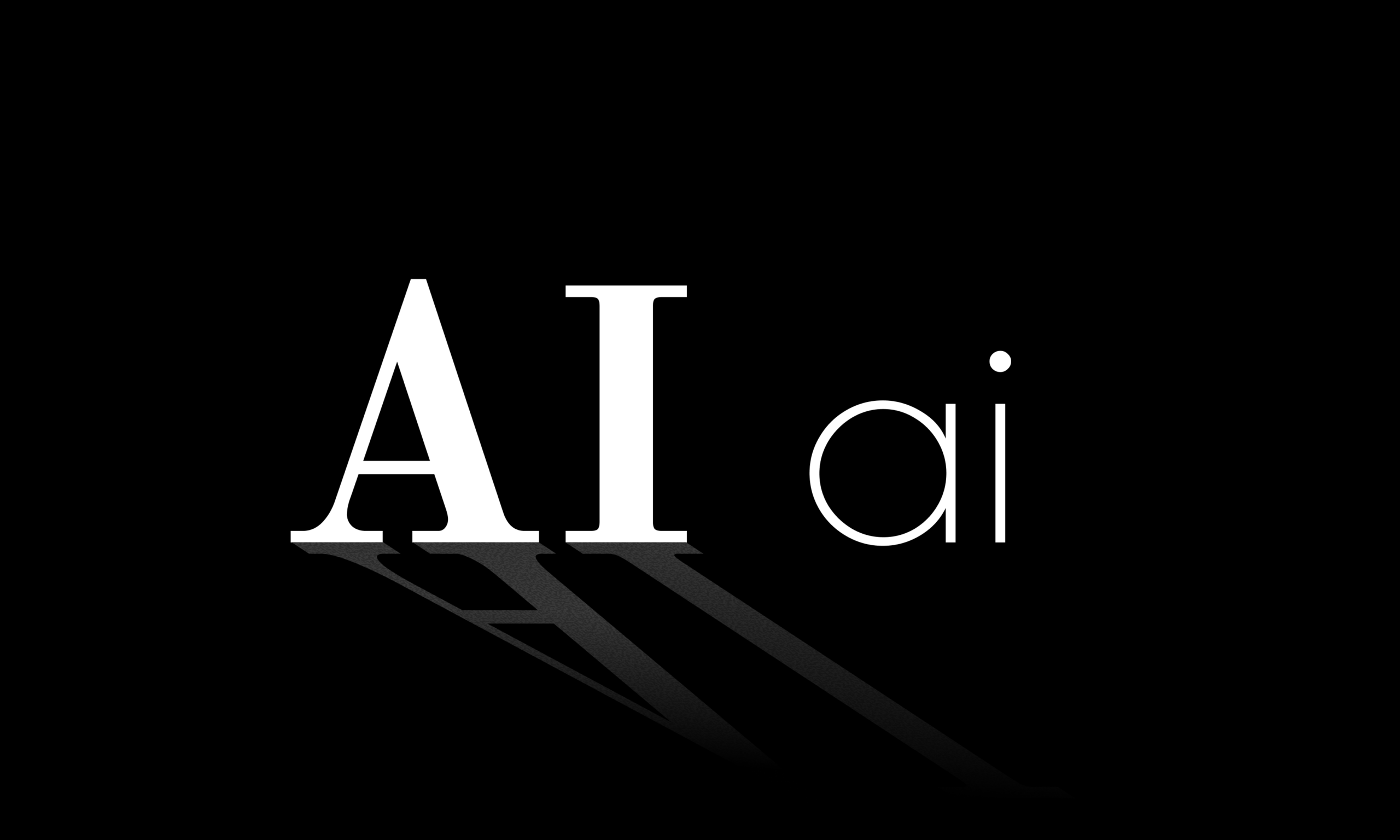
What do you think of the power of AI?
What do you think of the power of ai?
Notice the difference? Which one made you feel warmer, more secure, and less threatened? Yep I know which one, and you know I know which one.
Language is a marvelous thing. The changes can be subtle but there is significance in nuance. In behavioural science the use of language like this is called ‘orthographic promotion/demotion’; when we capitalise something we turn it into a proper noun and the symbols we use to communicate something change our relationship to it. Elevating it or demoting it.
The way we capitalise “AI” is doing quiet ideological work. Writers like Roland Barthes and the sociologist Bruno Latour have long argued that even small choices in language and typography carry meaning. In English, capital letters are reserved for things we treat as singular and important: God, America, Coca Cola. By writing “AI,” we quietly slot the technology into that category, as if it’s one big unified Thing rather than a collection of tools and techniques.
Capital “A” “AI” sounds inevitable, agentic, almost mystical. And, that framing happens to benefit the companies selling it, because awe makes people stop asking hard questions. That awe provides a quiet absolution of accountability. Anthropic is heavily playing this marketing game, making it seem like we can’t control the AI – saying we need to pause without pausing. This slowly dampens any expectation from the general public for them taking ethical ownership of what they are creating. The human is always accountable. It must be this way. Reconsidering language is a small but significant start.
There’s a useful precedent here: in 2016 the Associated Press changed its house style from “Internet” to “internet,” explicitly because the internet had stopped being one specific novel thing and had become ordinary infrastructure. Writing “ai” makes the same move early. It refuses the marketing department framing of “AI” as something that arrives, and reminds us that what’s actually happening is a messy, ordinary set of statistical methods being run by particular companies for particular reasons.
Writing “AI” symbolically elevates its position in our social hierarchy. Relegating it to “ai” disrupts this hierarchy, placing the human firmly back in the driver’s seat as the primary actor. The accountable. The creator. The person who points it in a direction.
If you know the story of Frankenstein you likely know the cultural misinterpretation. Frankenstein was a monster, but the monstrous creation was not Frankenstein. Frankenstein was the creator and he was the most evil person in the plot. The narcissist with a god complex who had no compassion for others and no care and consideration for others in his actions. Leading ultimately to a creation that caused terror born from selfishness, greed, hubris and neglect. Concluding with a destructive and terrifying demise for both: “You are my creator, but I am your master; – obey!” – The creation.
I believe in and celebrate the wonder of human creation, of technological advancement and innovation. I believe it is one of the pillars of humanity. Artificial intelligence and its impact is progression, but history is not yet written. We are writing it every day and we are writing it wrong.
This is an earnest invitation. Stop elevating systems, data, algorithms and technical innovations to some inevitable force that justifies a surrendering of thought, agency, accountability and purpose. Rewrite the truth: the human is responsible.
AI = surrendering of critical thought, loss of agency in the systems that govern our world and our society, a replacement, impeded curiosity in understanding the systems at play, a fear of adopting the technology to improve our situation and resolve real challenges in the world
ai = a human extension, a leg-up to resolve challenges in the world, an addition, a propellant, a tool, a risk to be governed, an opportunity to be explored, another step in humans path to wherever we’re going.
We’re keen to capture any support for the idea, you’re welcome to respond or not ..but we are curious FromAItoai
Note to reader: For all you pedantic linguists, we write pdf, rpm, jpg, cc, kph, mph in lowercase so it is possible for an initialism to make this transition from a proper language point of view. Other cultures/languages, like Japanese and Chinese, also don’t have capitalisation in their language and really more on the concept itself to communicate.